Our approach
Built like a service.
Run like an audit.
Every visit is logged, every observation traced, every protocol versioned. The result is a programme you can forget is running — until the report lands.
Senior site walk
A senior technician walks the space, photographs risk zones, and writes a baseline observation report — before anything is treated.
Versioned design
We propose a programme — frequencies, formulations, monitoring devices, and response windows — tailored and versioned to the space.
Scheduled cadence
Named technicians arrive in uniform on a fixed cadence. Each visit produces a signed digital report inside an hour of completion.
Quarterly board pack
A site lead reviews observations against baseline, adjusts the programme, and re-issues the version for your records.
Principles
What never changes, across every programme.
The operating standard is the same for a 900 sq ft apartment and a 60-key hotel. Cadence and coverage scale; method does not.
Named technicians. Every visit is performed by a technician you can name. Uniform, ID, and signed report. No subcontracting.
Versioned protocols. The programme document is a living spec. Each quarter's review issues a new version, with diffs you can read.
Discretion by default. No traps on view to guests. No pest imagery in any artefact. The programme is invisible by design.
48-hour response. Outside the schedule, an observation from your side is responded to within 48 hours. No exceptions.
In the field
Architectural interiors. Uniformed technicians. No pests, ever.
The brand never visualises the pest. Imagery is reserved for spaces we protect and the people who do the work — wide angles, considered composition, natural light.
 Pan India · Perimeter programme
In the field
Pan India · Perimeter programme
In the field
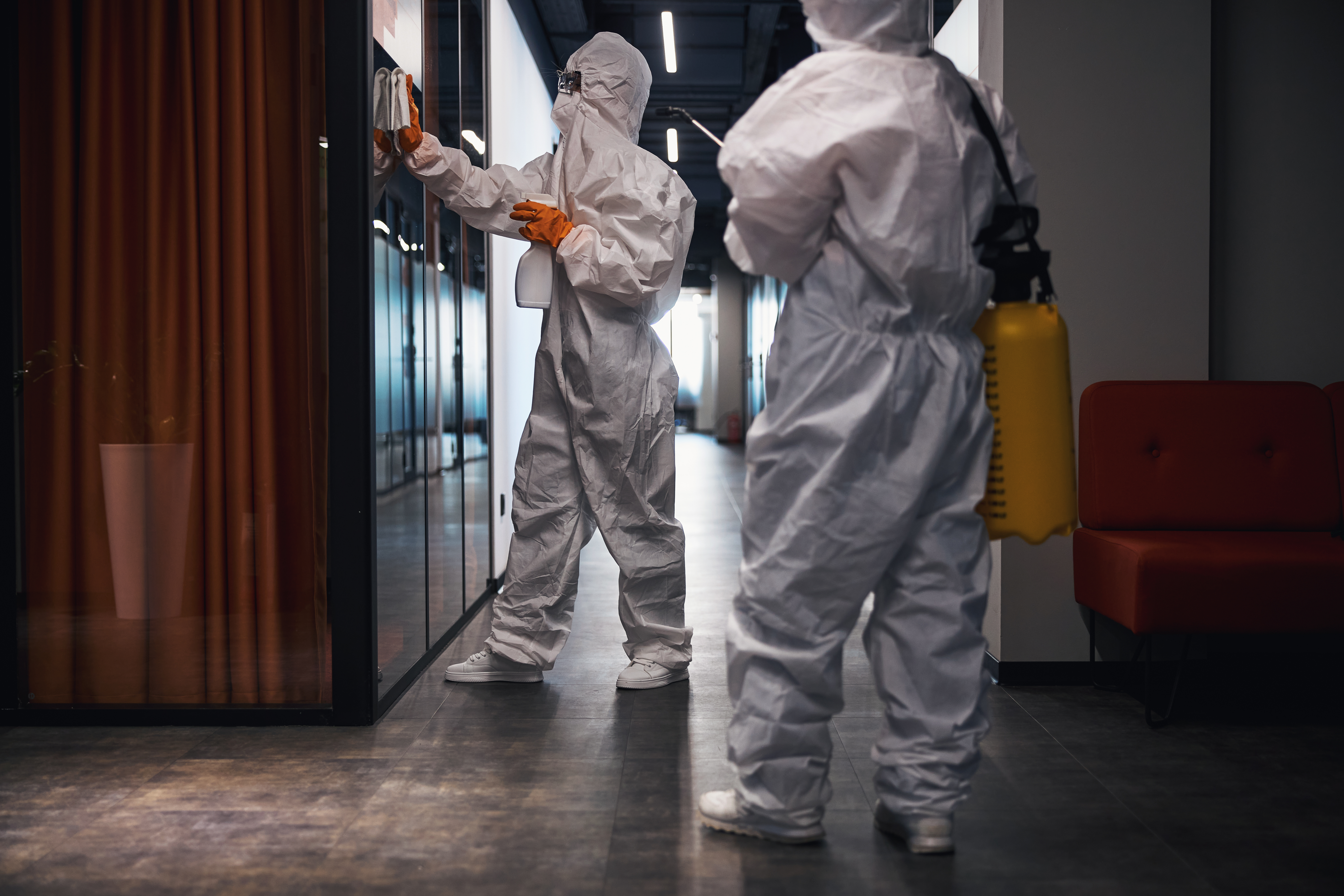 Pan India · Commercial programme
Technicians at work
Pan India · Commercial programme
Technicians at work
A sample report
See what a programme produces.
A redacted sample report from a Tier II commercial programme — quarterly observations, baseline diff, and protocol version log.